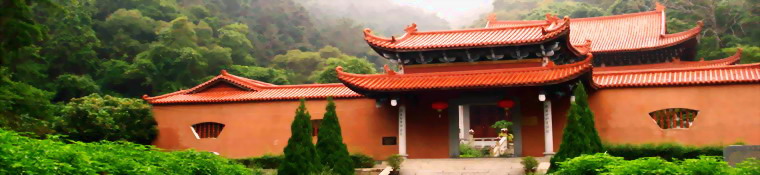
Tomb of Wang Zhaojun
Tomb of Wang Zhaojun is located on northern bank of Dahei River, nine kilometers from Hohhot the Inner Mongolia capital. It was built to commemorate a historical woman named Wang Zhaojun, who sacrificed herself in exchange for peace and political alliance. Popular as scenic spots around Hohhot, Tomb of Wang Zhaojun (Zhaojun Mu) is a man-made earthen mound, with 33 meters (110 feet) height, and about 13,000 sq meters coverage. In front gate of the tomb, there are bronze statues of Wang Zhaojun and her spouse Huhanye, a Xiongnu tribe chieftain.
Wang Zhaojun is one of the four most beautiful ladies (along with Diao Chan, Xi Shi and Concubine Yang) in ancient China. The legend said that she entered the harem of Emperor Yuandi of Han Dynasty (206 BC-220 AD) in early age, but never visited by the emperor and remained as a palace lady-in-waiting. When selecting a new concubine, the Emperor was first presented with portraits of all the possible women. Wang Zhaojun's portrait was either never viewed by the Emperor, or was not in its true form, and therefore the Emperor overlooked her.
In 33 BC, a Xiongnu Chieftain called Huhanye visit the Emperor, and he ask to be allowed to become an imperial son-in-law. The Emperor then decide to present Wang Zhaojun from his harem, to join with Xiongnu Chieftain. When summoned to court, her beauty amazed the emperor's courtiers and made the Emperor Yuandi reconsider his decision to send her to the Xiongnu. Furious with his mistake, Emperor Yuandi was finally persuaded in the sake of peace, to let her go with the Xiongnu. The result was a peace between Han and Xiongnu for over 60 years. The life of Wang Zhaojun is the subject of many legends and poems, and she is considered as a symbol of peace. Her tomb is mentioned in a book written in ancient period including the Tang era (618-907).
At the peak of the tomb, there are pavilion which offers tourists a good position to overlook the scenery surrounding the Tomb of Wang Zhaojun and the far away Mt. Yinshan. The summer months are mild, the grasses and wild flowers grow in abundance, creating a beautiful scenery together with the towering green trees. When autumn comes in September, unlike grasses which shriveled and yellow at this time of the year, the grass growing on the tomb is still green and vigorous, thats why this tomb has nickname Green Mound (Qin Zhong). Local Mongolian called the tomb as Temur Urkhu which mean Iron Wall. Tomb of Wang Zhaojun famous for its beauty scenery and one of eight the most popular scenic spots in Hohhot.
How to visit Tomb of Wang Zhaojun :
Take bus No.14 from the intersection of Shiyangqiao xilu and Nanchafang jie to its terminal at the tomb. Alternatively you can take a taxi or a long walk south down Tongdao nanjie, from the Great Mosque.
Opening hours : 10am-4pm.